Being the father of twins, I found these five points about parenting as an Orthodox Christian to ring true. I found these 'principles' in an article years ago. As turnabout is said to be fair play, I recently found them again being exposed by Leithart in the same original text! Here below is my rendition of these common sense points on parenting.
1. Children are sinners, not innocent and naturally good (Psalm 51:5; Romans 3:9-18). As Jesus said, infants and children are models of dependent faith. Yet, our children are also descended from Adam and therefore are corrupted by original sin. This condition characterises infants and children as well as adult sinners.
This innate corruption manifests itself in many ways. Crying is an infant’s only mode of communication, and it is not necessarily sinful; despite what Luther wrote in "Away in a Manger," Jesus in the manger did cry and yet was sinless. Yet, our infants do more than communicate with their cries. When only a few days old, infants cry to express their anger or impatience when their desires are not immediately fulfilled. Worse, descended from fallen Adam, our children resist anyone who tries to control or exercise authority over them. They invariably test the limits. When I said "No" to my 2 year-old son as he stretched out his hand to touch the computer keyboard, I could see on his face that he was debating whether or not to go ahead with his plans. Some children are less overtly rebellious than others, but all are rebels.
Most Christians believe in original sin, but often it plays little role in our parenting. We are reluctant to regard our children’s sin as sin. Instead, we make excuses for them. Very young infants, of course, have not learned the meaning of "No." Once they have learned that, however, we should not say of a disobedient child, "He doesn’t understand." When a child is uncooperative, we should not say, "Oh, he’s just tired." When children fight and treat one another cruelly, we should not say, "Boys will be boys." At other times, we refuse to believe that our children are capable of being as depraved as the Bible says they are: "Oh my child would never lie, steal, cheat, etc." But he would, and he does. We should recognise sin as sin and treat it as such. Circumstances might make children more prone to fuss and fight but circumstances are not an excuse for sinful behaviour. If your child has done something wrong, admit that it is a sin and give him the opportunity to confess it. Otherwise, you are training him to avoid responsibility. Thus, a corollary of this first notion is, don’t make excuses.
Also it poses a challenge to us as parents. Infants cannot raise infants. If you want your children to grow into mature adults, you have to act like an adult. Parents who make excuses for their own behaviour, who resist and rebel against those in authority over them, who follow whatever impulses pass through their heads, can hardly expect their children to behave differently.
2. You are the parents and they are the children. By this, I mean several things. As parent, you know better than your children what is good for them. They prefer sweets and ice cream to green vegetables, but you know that they need vegetables. You know that brushing their teeth is good for them, even if they do not understand that. You know they need a certain amount of sleep, so you set times for naps and bed.
Being the parent also means that you set the rules. Of course, we need to make sure that the rules are fair and biblical. If parents make up rules as they go, children can never know when they have broken the rules, and they will become frustrated. Children should see that parents too are under rules, that we cannot make up whatever rules we like. The fundamental rule to teach very young children is the fifth commandment: "Honour your father and mother." Every instruction or command from a parent becomes a rule because it comes from the parent.
Being a parent also means that you enforce the rules of the house and make sure the children live within the structures you set up. This is perhaps the most frequent failing for parents, especially new parents. We tell our son he needs to finish his vegetables before he has ice cream, but he complains and we eventually give in. We tell our daughter to go to bed, and in five minutes she is back in the lounge asking for a teddy bear. We tell a child to come, but he runs in the other direction.
This pattern produces enormous stress on parents and children. Parents get more and more frustrated and angry because their children do not listen, and children bear the brunt of the parents’ frustration. But parents often bring frustration upon themselves. In the short run, it takes some extra energy to make sure that children follow our instructions. In the long run, it is much easier on both parents and children if parents to follow through with their instructions and enforce the rules from an early age. Laziness is the main reason we do not follow through. And laziness is sin. If we have told our son to finish his vegetables, we need to make sure he does, even if this means spooning them into his mouth or leaving them for next morning’s breakfast. If we insist that he finish his vegetables before he eats anything else, he will eventually be hungry enough to eat broccoli, asparagus, and mushroom soup. If we send our daughter to bed, she should be required to stay there. If you tell your child to come to you and he does not, do not say it again, do not beg, coax, bribe, threaten, or count to three. Go get him and make him come. If you tell your children to help with the dishes and they do not, do not walk away. Make them do it.
In enforcing rules, parents have to recognise and resist their children’s efforts to manipulate. Do not let a child manipulate you by threats (I’m gonna run away) or emotional appeals (you don’t love me). If your child says such things, it may be a signal of deeper problems. More often than not, it is mainly a way to control you and to keep you from controlling him. Do not fall for it.
Being the parent means, finally, that your children owe you respect. Respect does not come naturally any more than obedience does. You need to train children to respect you. One way of teaching respect is by requiring them to submit to your control and your rules. If you tell them to do something but let them get away with ignoring you, they will lose respect. Children should also be disciplined specifically for disrespect, whether it manifests itself in words, actions, a tone of voice, or a gesture. Children should be disciplined not only for their disobedience but also for bad attitudes. If a mother tells her children to do something and gets a cheeky response, that is a sin and needs to be corrected.
Given points 1 and 2, it follows that conflict and confrontation are an unavoidable part of parenting. If your child is a sinner who wants to go his own way, and if you, as parent, take seriously your responsibility to train your children, then conflicts will occur. Of course, we should not create conflict, but when it happens we should not ignore or side-step it. Do not let a desire for peace and quiet dominate your parenting. What passes for peace is sometimes nothing more than a thin layer covering intense hostility. Conflict is not a sign of failure but of serious effort and even success. It shows that you are doing your job, not letting your children go off into foolishness but confronting and stopping it. If peace and quiet are supreme priorities, if you want to avoid conflict, do not have children.
3. Corporal discipline is a good and proper method for child training (Proverbs 19:18; 29:15). The Bible, tradition and the Fathers are clear not only that corporal discipline is a key tool for parenting, but also promises that faithful discipline will have spiritual effects. Stripes reach to the inner parts and cleanse away evil (Proverbs 20:30), the rod drives away foolishness (Proverbs 22:15), and disciplining a child will save him from Sheol (Proverbs 23:13-14). Christian parents sometimes come up with excuses for not spanking their children: It will turn our children against us, make them hateful and violent, get us in trouble with authorities. None of these holds weight. Using corporal discipline is a simple matter of obedience to God’s Word. We must use this tool wisely, but there is no valid reason for completely refusing to use it.
Corporal discipline must occur in a context of love and understanding. If done outside a loving and close relationship, smacking will seem harsh and arbitrary and it will be difficult for your child to believe that you are disciplining out of love. Your child will get the impression that they have to get into trouble to get any attention at all. Besides, children are different and respond to different kinds of training and discipline. At a young age, there is no substitute for swatting. No matter how persuasive you are, you cannot argue a determined one- or two-year-old out of running into the street. He needs to be restrained. As children get older, other forms of discipline may be more effective for particular children in particular circumstances, and you need to know your children well enough to discover what means are most effective with each.
Developing a close relationship requires some time. Parents should schedule individual time with each child to listen to them and seek to understand them. For several years, I have taken one of my children on a "date" every week. I spend an hour or so at the park, a coffee shop, or shopping mall. This gives me an opportunity to talk with each of them without interruption, and is a chance to discuss things that need to be addressed, such as school, future plans, friends, and so on.
When should a parent use corporal discipline? In part, this depends on the child and the parent. You will learn when your child will be corrected with a verbal rebuke and when they need a smacking. And it depends on the seriousness of the wrongdoing. Yet, as a rule, swatting is legitimate whenever your child breaks the rules. Breaking the rules is rebellion, and you must nip rebellion in the bud. If a parent calls a child, and the child refuses to come, the parent should go get the child, swat him on the bottom and make him come. If a daughter who has been put to bed keeps getting up, she should be spanked and sent back to bed. If a boy keeps climbing out of his high chair, he should be swatted and put back into the chair until the parent is ready to let him down. If they follow this procedure, mothers especially will feel that on some days they do nothing but swat the children. That can be emotionally draining, but my wife and I have found that early practice of corporal discipline does bear fruit, as the Lord has promised.
If corporal discipline is, as the Bible says, an act of love, it should look like an act of love. Parents should explain that they are disciplining out of love for the child. Afterwards, the parent should hug the child, kiss him, pray with him, and tell him again that he uses the rod out of love and out of obedience to the Lord. Loving discipline, however, does not mean mushy or vague discipline. Just as the Lord is specific in His demands upon us and specific in His rebukes, so loving discipline should be firm and specific. Parents should make sure that the child understands the rules, and make sure that he knows what rule has been broken. We should encourage children to take responsibility for the specific sin they have committed. Saying "I’m sorry" is usually not sufficient; the child should be required to say, "I’m sorry for hitting Julie" or "I’m sorry for taking your truck without asking" or "I’m sorry for lying." In this way, we train our children to take responsibility for their own specific actions.
I do not believe it is always wrong for a parent to swat a child when he or she is angry. The Lord disciples His people in wrath, and anger at disobedience can give the child a proper sense of the seriousness of his sin. It is wrong, however, for a parent to swat a child because he or she is angry. That would turn discipline into an opportunity for the parent to vent his frustrations, and would encourage the child to express himself violently. Corporal discipline should always be motivated by the loving desire to prevent the child from doing something wrong or harmful, to purge foolishness from his heart, to keep him on the way of righteousness. As the Bible shows us, God’s love for His children and His anger at their foolishness are closely linked.
4. Children grow up. At this point the goals of parenting come into play. What are we trying to accomplish during the 15--20 years we raise our children? Should protection be our main goal? Do we want to produce children that are carbon copies of ourselves, imitating our tastes, plans, and dreams? Or do we want to encourage them to chart their own course without regard to our opinions? As Christians, our goal in parenting is to raise mature adult believers who trust in and follow Jesus and serve His Church and Kingdom. With respect to our faith, we hope our children will imitate us, insofar as we are faithful. The Church, however, is made up of many members with many different gifts, and we should not expect our children to have the same gifts we have. Parents who are ears in the body of Christ may end up with children who are hands, brains, and toes. Our goal is to train our children to be the best hands, brains, and toes they can possibly be, rejoicing in their specific abilities.
In parenting, then, there has to be a balance of control and freedom. Maintaining this balance is difficult, but the Lord’s training of Israel gives us an example to follow. In Galatians 3:23-24 and 4:1-2, Paul says that Israel under the Old Covenant was like a minor child under the control of tutors and child-minders. Though a child is the heir of the whole house, he is treated like a slave during his childhood. But now, Paul says, those who are in Christ are no longer under the "elementary principles" of the law, but are mature and fully active sons and heirs. Paul’s point is clearer when we consider the character of the Old Covenant system. The Lord told Israel what to eat (Leviticus 11) and what kinds of clothes to wear (Leviticus 19:19; Numbers 15:37-41). Normal bodily functions caused uncleanness, so Israelites had to bathe before entering the Lord’s house (Leviticus 12-15). Their lives were tightly controlled and regulated. All of these commands to Israel are instructive for the Church today (cf. 2 Timothy 3:16-17) and God is still concerned about the details of His Word and of our obedience to it. Yet, we no longer have to perform these "elementary" regulations because, in Christ, we have grown up.
Similarly, in raising our children, we move through four general stages. These are not absolutely distinct and it would be a mistake to make this some kind of absolute framework, but they give a rough outline of how the parents’ role changes as the child grows.
First, when children are very young, parents control them. Young children should be trained to obey their parents immediately without discussion or question. Parents supervise the most minute details of their lives: what to wear, when to go to bed, how to hold the fork and spoon, how to chew food. In this phase, parents must do many things for the child. This is the predominant mode of parenting for the first seven or eight years, though the time period will vary somewhat.
Second, the parental role changes to coaching, from about eight to young teens. Coaching involves detailed and ongoing guidance of the child. A coach teaches and corrects, but the child is responsible to follow the coach’s direction. Thus, the older child has more responsibility and independence. Parents can test whether their children are ready for this transition by giving them small projects or tasks and evaluating their performance. A child of eight or nine should be able, for example, to go to the post office to buy stamps or to a newsagent to buy a paper. Daddy might first accompany his son, show him what to do, and then send him on his own the next time. By giving responsibility at this micro-level and gradually increasing it, parents avoid overwhelming their children, increase their confidence to act on their own, and give them room to fail and learn.
If a coach is doing his job, his players will eventually learn to think independently, calling some of their own plays. They will sometimes want to ask the coach for his advice in a particular situation, but they will increasingly learn to make decisions for themselves. This is the stage the Whites call counselling. During this period, parents advise children when asked, but leave them considerable room to experiment with their own ways of doing things. Even at this stage, parents exercise some degree of control. Parents should never give their children freedom to sin. As long as my children are in my house, for example, I will expect and require them to attend worship, participate in family worship, walk in God’s commandments. But the parents’ role is changing as the child grows into an independent adult believer.
Finally, with adult children, you reach the stage of caring. Grown children may ask parents for advice and sometimes even detailed coaching. There may be occasions when a parent must, in obedience to Christ, take the initiative to rebuke or correct a child. Here, however, their relationship has become more like that of two unrelated adult believers. Generally, parents should avoid giving their grown children unsolicited advice, freeing them to make their own decisions and their own mistakes.
To help make this scheme more concrete, let me offer one specific example: money. At the control stage, a child is physically unable to handle money. If given an allowance, he is likely to lose it. So, parents should exercise a great deal of control. If a child receives a monetary gift, the parent should decide how it is spent, perhaps even without consulting the child. If the child makes some change by working around the house, the parents should keep it for him.
Once the child can keep track of money without losing it and can add and subtract, the parent shifts to coaching. At this point, the child may be given an allowance, but the parent will still exercise a significant degree of authority over how it is used. The parent might require, for example, that the child give 10% to the church, keep 40% for savings and gifts, and have 50% for spending. If the child wishes to make a foolish purchase, the parent may forbid it. Alternatively, it may be prudent for a parent occasionally to allow a foolish purchase, which can be turned into an opportunity for the child to learn from a mistake. At least, the child who makes a rash financial decision will learn the painful but absolute economic truth that money spent on one item cannot be spent on another.
At the counselling stage, parents give advice concerning how money is spent and may occasionally intervene to forbid a purchase. In the main, however, the parents’ role is one of advising. If a child wishes to buy a computer, for example, the parents might help him find information, instruct him how to decide on a good purchase, point out the costs of using and maintaining a computer, warn against the temptations that might present themselves on the Internet or in some computer games. If the child finds that he has made a poor decision, he should be left to correct the problem himself.
When children have grown to adulthood and left home, parents should generally leave financial decisions completely to them. If parents have been careful to train their children in financial prudence, they are less likely to get into serious financial problems as adults. If they do fall into difficulties, parents should resist the temptation to intervene immediately to protect them from ruin.
In this process, two main errors must be avoided. Parents err if they fail to exercise control at the early stages of life or give too much responsibility too early. On the other hand, parents err if they try to maintain tight control when their children have outgrown that stage of their lives. Knowing when to loosen and when to tighten the reins requires a great deal of wisdom and prayer. This brings me to the fifth and last point…
5. God is sovereign; the Trinity rules all things for His own purposes, including our children. We must make every effort to train them in His ways, but their future is ultimately in His hands. That is a good thing, for I would certainly make a muddle of things! For parents, the truth that God is sovereign means: Relax and Trust the risen Lord.
2006-05-08

2006-05-05
Emily is for manly men

Because I could not stop for Death
BECAUSE I could not stop for Death--
He kindly stopped for me--
The Carriage held but just Ourselves--
And Immortality.
We slowly drove--He knew no haste
And I had put away
My labour and my leisure too,
For His Civility--
We passed the School, where Children strove
At Recess--in the Ring--
We passed the Fields of Gazing Grain--
We passed the Setting Sun--
We paused before a House that seemed
A Swelling of the Ground--
The Roof was scarcely visible--
The Cornice--in the Ground--
Since then--'tis Centuries--and yet
Feels shorter than the Day
I first surmised the Horses Heads
Were toward Eternity--
Emily Dickinson
I've considered Emily Dickinson to be a poet of the highest order for many years. If pressed, I would say this gem is one of my favourites.
I enjoy how the poem can aid one in contemplating a restful drive outside of our time-space continuum. Be sure to make note of the number of passengers.
2006-04-27
homily by Leithart
Paul determined to know nothing but Jesus and the cross. Was that enough? To answer that question, we need to answer another: What is the cross?
The cross is the work of the Father, who gave His Son in love for the world; the cross is the work of the Son, who did not cling to equality with God but gave Himself to shameful death; the cross is the work of the Spirit, through whom the Son offers Himself to the Father and who is poured out by the glorified Son. The cross displays the height and the depth and the breadth of eternal Triune love.
The cross is the light of the world; on the cross Jesus is the firmament, mediating between heaven and earth; the cross is the first of the fruit-bearing trees, and on the cross Jesus shines as the bright morning star; on the cross Jesus is sweet incense arising to heaven, and He dies on the cross as True Man to bring the Sabbath rest of God.
Adam fell at a tree, and by a tree he was saved. At a tree Eve was seduced, and through a tree the bride was restored to her husband. At a tree, Satan defeated Adam; on a tree Jesus destroyed the works of the devil. At a tree man died, but by Jesus' death we live. At a tree God cursed, and through a tree that curse gave way to blessing. God exiled Adam from the tree of life; on a tree the Last Adam endured exile so that we might inherit the earth.
The cross is the tree of knowledge, the tree of judgment, the site of the judgment of this world. The cross is the tree of life, whose cuttings planted along the river of the new Jerusalem produce monthly fruit and leaves for the healing of the nations.
The cross is the tree in the middle of history. It reverses what occurred in the beginning at the tree of Eden, and because of the cross, we are confident the tree of life will flourish through unending ages after the end of the age.
The cross is the wooden ark of Noah, the refuge for all the creatures of the earth, the guarantee of a new covenant of peace and the restoration of Adam. The cross is the ark that carries Jesus, the greater Noah, with all His house, through the deluge and baptism of death to the safety of a new creation.
The cross is the olive tree of Israel on which the true Israel died for the sake of Israel. For generations, Israel worshiped idols under every green tree. Israel cut trees, burned wood for fuel, and shaped the rest into an idol to worship. Now in the last days, idolatrous Israel cut trees, burned wood for fuel, and shaped the rest into a cross. The cross is the climax of the history of Israel, as the leaders of Israel gather to jeer, as their fathers had done, at their long-suffering King.
The cross is the imperial tree, where Jesus is executed as a rebel against empire. It is the tree of Babylon and of Rome and of all principalities and powers that will have no king but Caesar. It is the tree of power that has spawned countless crosses for executing innumerable martyrs. But the cross is also the imperial tree of the Fifth Monarchy, the kingdom of God, which grows to become the chief of all the trees of the forest, a haven for birds of the air and beasts of the field.
The cross is the staff of Moses, which divides the sea and leads Israel dry through it. The cross is the wood thrown into the waters of Marah to turn the bitter waters sweet. The cross is the pole on which Moses lifted up the serpent in the wilderness, as Jesus is lifted up to draw all men to Himself.
The cross is the tree of cursing, for cursed is every man who hangs on a tree. On the tree of cursing hung the chief baker of Egypt; but now bread of life. On the tree of cursing hung the king of Ai and the five kings of the South; but now the king of glory, David's greater Son. On the tree of cursing hung Haman the enemy who sought to destroy Israel; but now the savior of Israel, One greater than Mordecai. Jesus bears the curse and burden of the covenant to bear the curse away.
The cross is the wooden ark of the new covenant, the throne of the exalted savior, the sealed treasure chest now opened wide to display the gifts of God – Jesus the manna from heaven, Jesus the Eternal Word, Jesus the budding staff. The cross is the ark in exile among Philistines, riding in triumph even in the land of enemies.
Jesus had spoken against the temple, with its panels and pillars made from cedars of Lebanon. He predicted the temple would be chopped and burned, until there was not one stone left on another. The Jews had made the temple into another wood-and-stone idol, and Israel must have her temple, even at the cost of destroying the Lord of the temple. Yet, the cross becomes the new temple, and at Calvary the temple is destroyed to be rebuilt in three days. The cross is the temple of the prophet Ezekiel, from which living water flows out to renew the wilderness and to turn the salt sea fresh.
The cross is the wood on the altar of the world on which is laid the sacrifice to end all sacrifice. The cross is the wood on which Jesus burns in His love for His Father and for His people, the fuel of His ascent in smoke as a sweet-smelling savor. The cross is the wood on the back of Isaac, climbing Moriah with his father Abraham, who believes that the Lord will provide. The cross is the cedar wood burned with scarlet string and hyssop for the water of purification that cleanses from the defilement of death.
The cross is planted on a mountain, and Golgotha is the new Eden, the new Ararat, the new Moriah; it is greater than Sinai, where Yahweh displays His glory and speaks His final word, a better word than the word of Moses; it is greater than Zion, the mountain of the Great King; it is the climactic mount of transfiguration where the Father glorifies His Son. Calvary is the new Carmel, where the fire of God falls from heaven to consume a living twelve-stone altar to deliver twelve tribes, and turn them into living stones. Planted at the top of the world, the cross is a ladder to heaven, angels ascending and descending on the Son of man.
The cross tears Jesus and the veil so that through His separation He might break down the dividing wall that separated Yahweh from his people and Jew from Gentile. The cross stretches embrace the world, reaching to the four corners, the four winds of heaven, the points of the compass, from the sea to the River and from Hamath to the brook of Egypt. It is the cross of reality, the symbol of man, stretching out, as man does, between heaven and earth, distended between past and future, between inside and outside.
The cross is the crux, the crossroads, the twisted knot at the center of reality, to which all previous history led and from which all subsequent history flows. By it we know all reality is cruciform – the love of God, the shape of creation, the labyrinth of human history. Paul determined to know nothing but Christ crucified, but that was enough. The cross was all he knew on earth; but knowing the cross he, and we, know all we need to know.
In the Name of the Father, and of the Son, and of the Holy Spirit. Amen.
2006-04-26
St. John Chrysostom's Paschal Homily
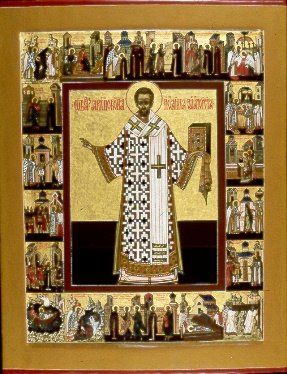
Is this not the finest homily to teach everything one needs to know about Orthodoxy and to express the inexpressible joy of Pascha at the same time? I was told by Fr. Lawrence it was composed sometime in the late 4th or early 5th century; this homily is a delight to hear year after year, one of the finest treasures of our Orthodox inheritance.
The Paschal Homily of St. John Chrysostom
If anyone is devout and a lover of God, let him enjoy this beautiful and radiant festival.
If anyone is a wise servant, let him, rejoicing, enter into the joy of his Lord.
If anyone has wearied himself in fasting, let him now receive his recompense.
If anyone has labored from the first hour, let him today receive his just reward. If anyone has come at the third hour, with thanksgiving let him keep the feast. If anyone has arrived at the sixth hour, let him have no misgivings; for he shall suffer no loss. If anyone has delayed until the ninth hour, let him draw near without hesitation. If anyone has arrived even at the eleventh hour, let him not fear on account of his delay. For the Master is gracious and receives the last, even as the first; he gives rest to him that comes at the eleventh hour, just as to him who has labored from the first. He has mercy upon the last and cares for the first; to the one he gives, and to the other he is gracious. He both honors the work and praises the intention.
Enter all of you, therefore, into the joy of our Lord, and, whether first or last, receive your reward. O rich and poor, one with another, dance for joy! O you ascetics and you negligent, celebrate the day! You that have fasted and you that have disregarded the fast, rejoice today! The table is rich-laden; feast royally, all of you! The calf is fatted; let no one go forth hungry!
Let all partake of the feast of faith. Let all receive the riches of goodness.
Let no one lament his poverty, for the universal kingdom has been revealed.
Let no one mourn his transgressions, for pardon has dawned from the grave.
Let no one fear death, for the Saviour's death has set us free.
He that was taken by death has annihilated it! He descended into hades and took hades captive! He embittered it when it tasted his flesh! And anticipating this Isaiah exclaimed, "Hades was embittered when it encountered thee in the lower regions." It was embittered, for it was abolished! It was embittered, for it was mocked! It was embittered, for it was purged! It was embittered, for it was despoiled! It was embittered, for it was bound in chains!
It took a body and, face to face, met God! It took earth and encountered heaven! It took what it saw but crumbled before what it had not seen!
"O death, where is thy sting? O hades, where is thy victory?"
Christ is risen, and you are overthrown!
Christ is risen, and the demons are fallen!
Christ is risen, and the angels rejoice!
Christ is risen, and life reigns!
Christ is risen, and not one dead remains in a tomb!
For Christ, being raised from the dead, has become the First-fruits of them that slept.
To him be glory and might unto ages of ages. Amen.
2006-04-18
manliness
 So it appears that Maddox has published a book on manliness. I am certain the book will be hilarious and profoundly manly at one and the same time. Mathematically, as Maddox expresses it, the book's manliness limit is limitless:>
lim
Manliness → ∞
I still think that Maddox has yet to read Judges 19 to understand what untamed manliness is like. Whoever thought the Bible records only the rosy and lovey-dovey tales is mistaken. Of course the type of manliness described in Judges 19 is manliness-falsely-so-called. But Maddox's book should be a howl.
2006-04-11
QW: the best first person shooter!
 The finest game I have ever played, quake, has an online version called quakeworld. I have played this game since 1997-1998. I started my gaming life by playing a great shooter called DooM. That was in 1993-4. I remember Dave Folster got me set up with the game. I played the game without a mouse, using only the keyboard to move and look around. I enjoyed DooM a lot and still like to deathmatch against another person or a bot. Occasionally I still load up the game and play it through in single player. I have to admit I've seen everything DooM can offer, yet the game can at times freak me out because of the in-game atmosphere. The single player game of Quake teaches you to engage in battle with demons; which I must say is a very good activity for the manly spirit in all of us. In QW, it is much the same. The main difference being that QW is about playing deathmatch against other humans, most often in 4 versus 4 matches. There is little doubt that QW involves the most demanding skill-set of any first person shooter; the speed of the game, the hard-to-learn movement skills and the team communication skills and tactics are challenging to master. QW is like chess with a boomstick.
2006-04-07
Fr. Chris, Thomas Aquinas, Temporality, and the end of deeds
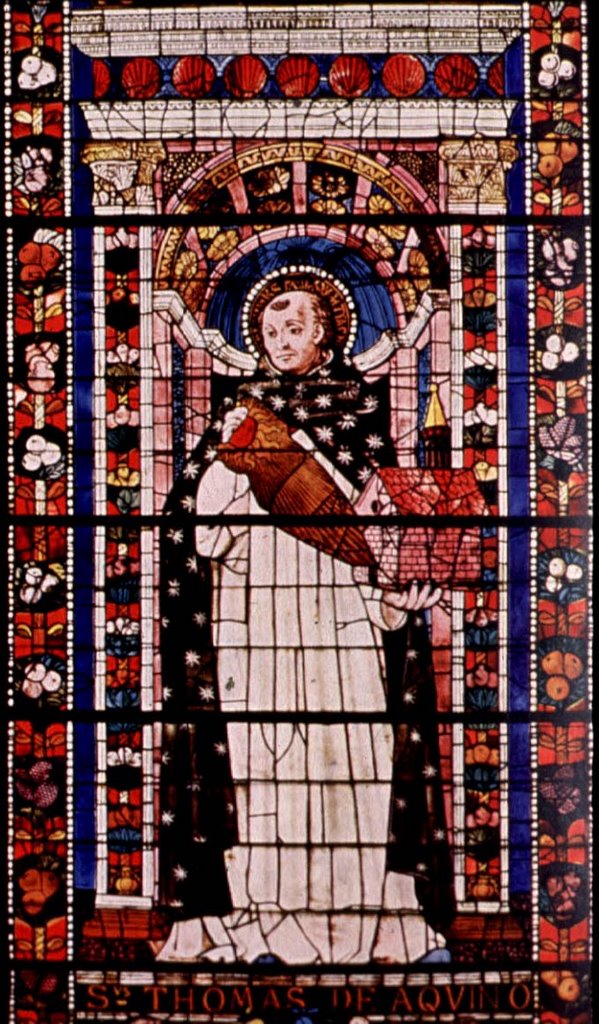
Earlier in Lent, I was discussing the relationship between time and the end of actions with Fr. Chris of Vancouver. The insight of that conversation led me to think about what Thomas Aquinas had written on the topic.
Why should there be a final judgment when God judges in time?
Thomas Aquinas answers: "Judgment on something changeable cannot be rendered fully before its consummation. Thus judgment cannot be rendered fully regarding the quality of any action before its completion, both in itself and its results, because many actions appear to be advantageous, which by their effects are shown to be harmful. Even a human life continues after the human life is ended: it must be observed that although a person's earthly life in itself ends with death, it nevertheless remains to some degree dependent on what comes after it in the future. In one way, one's life continues on in people's memories, in which, sometimes contrary to the truth, good or evil reputations linger on. In another way, one lives on in one's children, who are, as it were, something of their parent. In a third way, one lives on to a degree in the result of one's actions, as in the case of how, from the deceit of Arius and other false leaders, unbelief continues to flourish down to the end of the world, just as faith will continue to derive its progress until then from the preaching of the apostles. In a fourth way, one lives on as regards the body, which is sometimes buried with honour and sometimes left unburied, and finally turns completely to dust. In a fifth way, one lives on in the things on which one's heart is set, such as worldly concerns, some of which are ended quickly, while others endure longer."
Given this, God must render judgment not only actions and persons in the middle of their history but also at the end: "a definitive and public judgment cannot be made of all these things during the course of this present time."
In a way this doesn't do much to answer the original question, since Aquinas believes that the final verdict will be the same as the verdict passed at the time of a person's death (a person will be in heaven or hell before their actions are "ended"). He suggests that one reason for the final public judgment is to overturn and correct "the imperfect judgment that human beings have made" in the course of history. Plus, although the judgment rendered at death is not reversible, there can be a kind of intensification of judgment: "Arius, at his death, could be judged for his erroneous beliefs about the Trinity; at the final judgment he could also be held accountable for the evil effects of his teaching on later generations."
Apart from the context of final judgment, Thomas' comments here are very intriguing. First, it suggests that endings are as problematic and elusive as beginnings. Second, it suggests some grounds for thinking that the meaning/significance of things appears to change over time. The reason Aquinas gives is that actions are not complete until all the consequences of the action have been taken into account. Precisely, Thomas does not believe that the significance of an action changes over time, but rather that the action is not complete without its effects, and that the meaning of the action cannot be known until it is complete. Thus, for instance, the final meaning of my speech-act today is deferred until all the effects of my speech-act are realized. This puts Thomas intriguingly into conversation with Derrida, with the absolutely critical difference that Thomas believes there is an end, a final summing up, a final judgment. (Thomas also believes that there are judgments within history as well as at the end; this also seems to be an important qualification to his recognition of dissemination.)
Finally, this passage discloses something about Thomas, whose theology is often characterized as static and rigid. To that we can say: not at all. As Fr. Chris said to me, "Thomas stop thinking linearly." In some ways I am like the great Schoolman, yet I fail to possess any of his non-linear mystical fire. "O for a Muse of fire that would ascend the brightest heaven of invention," as the Poet wrote. O that I would ascend!
2006-04-05
Apple Allows Windows on Its Machines
 April 5, 2006
Turning a decades-long rivalry on its head, Apple Computer introduced software today that it says will easily allow users to install Microsoft's Windows XP operating system on Apple's newest computers.
The software, Boot Camp, is available as a free download on Apple's Web site and will be part of the next version of Apple's operating system, Leopard. It works on Apple's three lines of computer that run on Intel chips — the Mac mini, the iMac and the MacBook Pro.
Apple's move is a recognition of the growing interest among some users in running Windows on Macintosh computers now that they are using Intel processors, which power the majority of Windows-based personal computers. Many technology enthusiasts have already been sharing software and tricks on the Internet to allow Mac users to add Windows to their new machines, though those approaches involve a far more complicated installation than Apple's new software does.
In a statement today, Apple said it does not intend to support Windows for customers who install Boot Camp and run Windows XP on their machines. Still, the company said it is providing the software because it recognizes a sizeable demand — and opportunity.
"We think Boot Camp makes the Mac even more appealing to Windows users considering making the switch," Philip Schiller, Apple's senior vice president of worldwide product marketing, said in the statement.
Investors seemed to think the strategy would help Apple expand its share of the personal computer market beyond the 3 percent to 5 percent level where it has stood at for many years. Shares of Apple jumped $4.23, or 7 percent, to $65.40 in morning trading. Shares of Microsoft were up 6 cents, to $27.70.
After years of stagnant or declining computer sales, Apple has seen a steady and significant rise in its desktops and laptops in recent years as more consumers have purchased its iPod music player and bought songs through its online iTunes music store.
Though Apple's shift to Intel from chips made by International Business Machines and a former division of Motorola has been considered risky from a technical and business standpoint, the move could help the company capitalize further on the so-far modest gains it has made in the computer business.
Many personal computer users have been reluctant to switch to Apple, because they cannot use software that is written to run exclusively on the Windows operating system, said Charles Wolf, a veteran technology industry analyst at Needham & Company. By making it easy for users to run Windows software on its machine, Apple has taken away "one of the most significant barriers to switching," he said.
The key test will be whether computer buyers will be willing to spend more money to buy an Apple computer to run the same software they can run on a far cheaper Windows-based machine from manufacturers like Dell and Hewlett-Packard.
Mr. Wolf calculates that Apple's biggest market share gains will be among residential users, who are more likely to be swayed by Apple's design and media savvy than corporate and government customers who will likely to stick with cheaper hardware and software configurations.
The shift could mean a significant increase in sales for Apple over time, especially after Leopard becomes the standard Mac operating system late this year or early in 2007. But the company's gains do not have to mean big losses for other hardware makers, Mr. Wolf said, because they will only lose a small fraction of their market share.
"You are starting out with a market share of 2 or 3 percent and maybe going to a market share of 6 or 7," he said. "Apple is not going to take over the world."
Users who download and install Boot Camp must buy a copy of Windows XP software, which starts at $141.98 for the home edition. The Boot Camp software serves as an intermediary that creates an installation disk (users will need to provide a blank compact disk for this step) that lets the Windows software operate the Apple hardware, including its networking, audio and graphics devices and controls. Certain other features like a remote control for Apple's media software will not work with Windows software.
Once the installation is complete, users can select which operating system, Apple or Windows, they want to use each time they start the computer. Sounds sweet?!
2006-04-03
Schmemann's Journals and Thomas Hopko on Prayer
The journals of Alexander Schmemann were published in 2000 by St Vladimir's Seminary Press, and they are simply mesmerizing. The same rich voice — the same rich soul — that is evident in Schmemann's classic published works shines through in these journals. His semi-"outsider" status as an Orthodox Christian in a Protestant nation gives him a unique perspective on American life. His long experience as a theology teacher with pastoral responsibilities gives him rare insight into the church and human personality. And he is altogether human. A moment of solitary silence at a train stop fills him with overwhelming joy, but in the next entry he is despairing of the direction of his life (he began the journal when he was 52). As a man of 40, I can relate to this type of spiritual self-questioning: should I have not stepped back from becoming a deacon, should I have had coffee with that person or enjoyed that mountain view, should I have not wasted time fly fishing or reading about tying knots or how to code in C? And so it runs on.
Schmemann's descriptions of his several intense encounters with Solzhenitsyn are worth the whole book; Solzhenitsyn, by Schmemann's account, is absolutely committed and obsessed with his own calling and vocation, uninterested in anything outside of that, ascetically single-minded. The description rings true, and indicates one of the key reasons for the later strain between the two men, given that Schmemann describes himself as a man who instantly sees both sides of a question.
The whole volume is wonderful, but I confine myself to just one sample:>
Why am I drawn from America to Europe and from Europe back to America? I feel that the usual answer is, Europe is culture, roots, traditions. America is freedom and also lack of culture and rootlessness. This answer is incomplete, one-sided, simplified and incorrect. Tentatively, I would say that in America, one finds everything that Europe has, while in Europe there is hardly anything of what America is. One is drawn, not so much TO Europe as OUT of America because in Europe one is spiritually more comfortable. There is always something to lean on, almost physically, whereas America is spiritually difficult. For years, people have rushed to America for an easier life, not realizing that deep down, life is much more difficult there. First of all, America is a country of great loneliness. Each one is alone with his own fate, under a huge sky, in the middle of a colossal country. Any culture, tradition, roots seem small there, but people strongly cling to them, knowing full well their illusory character. Secondly, this solitude in America demands from everyone an existential answer to the question, to be or not to be, and that requires effort. Hence so many personal crashes. In Europe anyone who falls, falls on some ground; in America he flies into an abyss. So much fear, such angst.
What draws a person to America is the possibility of having one's own individual fate. Once you have tasted it, it becomes impossible to be just a Finn or a Frenchman; in other words, to be determined once and for all. One is liberated from it. And although liberated, one is often drawn again to the illusory stability of Europe, to dreams and fantasy . . . While walking from Notre Dame to the Seine, to Place des Vosges, I realize that all that I like so much is illusory, not needed, that it has no relation with the France of Mitterand and others. The real France wants to become America. America does not want to become Europe, therefore it is genuine, while Europe is steadily losing its genuine character.
It is good for a man with a very small spiritual stature to read the thoughts of a great man who knows how to give thanks. And according to Fr. Thomas Hopko, the prayers of a thankful man lighten the heart of despair and put a man into a right relation with God the Maker. The brilliant fly fishing priest notes the classification of prayer into four types: asking (for oneself and others), thanking, praising, and questioning or complaining to God. "To learn to come to God in every situation," explains Fr. Hopko, "and with each of the four categories operating all the time, is a very important achievement: the achievement of a prayerful life."
What may we ask for in prayer? "For everything good; and nothing good is too small. For what should we thank Him? For everything. For what should we praise? For everything. About what may we question? About all things not understood. About what may we lament and complain? About all that is frustrating, confusing, and tragic in our lives. But in all things: thanksgiving and praise, for this is the essence of faith." And in all things, Fr. Hopko stresses: "Thy will be done."
Prayer must be private, personal, and secret. It cannot be limited just to the liturgy 'the common work' of the Church. Strictly speaking, the liturgy of the Church is not merely a form of personal prayer, a form done corporately and openly, together with others. Liturgy is more than a prayer. It is gathering, being together, singing, celebrating, processing, announcing, teaching, listening, interceding, remembering, offering, receiving, having communion with God and each other, being sent into the world with an experience of something to be witnessed to… Its efficacy depends upon our personal prayer done alone in secret. The liturgy cannot be our only prayer. If it is, we should seriously question its meaning and power for us.
How can we begin to pray? Just by beginning. But how to begin, with what sort of methods? Everyone's way will be different, but the saints give two absolute rules: be brief, and be regular. These are the pillars of prayer. Brevity to ensure humility, to discourage despair, and to enable us to do what can reasonably be done. And regularity to build the rhythm of prayer into the rhythm of life as an unchanging element of our existence. It is a million times more effective and pleasing to God to have a short rule of prayer rigidly kept at regular times than to "do a lot" just any old time, whenever we happen to do it.
This bolded bit is particularly pleasing for me to know. I will end this post with a thought by my favourite novelist:
Young man, do not forget to say your prayers. If your prayer is sincere, there will be every time you pray a new feeling containing an idea in it, an idea that you did not know before, which will give you courage. Then you will understand that prayer is an education...
2006-04-01
Auden and Worship
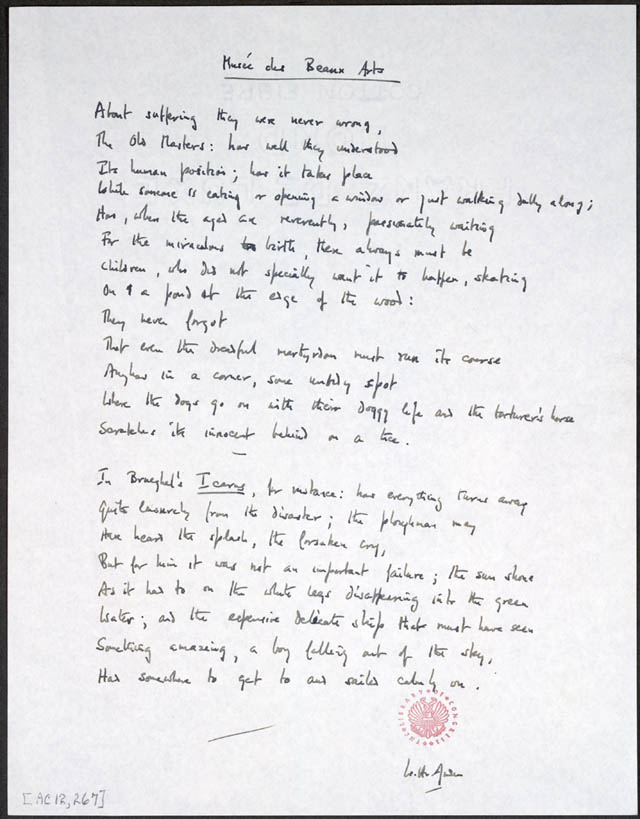 W. H. Auden said, "In my opinion sermons should be [a] fewer [b] longer [c] more theologically instructive and less exhortatory. I must confess that in my life I have very seldom heard a sermon from which I derived any real spiritual benefit. Most of them told me that I should love God and my neighbour more than I do, but that I knew already."
His first experience of worship was of "exciting mysterious rituals" rather than sermons, and this "implanted in me what I believe to be the correct notion of worship, namely, that it is first and foremost a community in action, a thing done together, and only secondarily a matter of individual feeling or thinking."
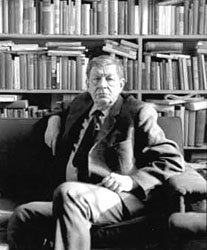
I don't agree with Auden regarding points [a] or [b]. Against point [a], I do think a weekly homily is a needed aspect of life in our age in our North American environs. Because we are living in such a violently materialistic time, the spiritual weapons of Christ's Gospel need to be forged in us on a weekly basis; perhaps even more so during Lent. Again, with regard to point [b], I think longer homilies are counter-productive; too much listening leads to most people turning slightly dull of hearing. A short and focussed sermon makes a few points that will have a better chance to stick. But oddly in the light of his thoughts on homilies, I confess that I concur with his experience of worship. Surely as any Orthodox would? He seems to be touching upon the sacramental aspect of worship; and aren't these the types of heavenly realities for us in the Church? Does he not also touch upon the fundamental authentic Christian truth that worship is corporate and not individualistic?
2006-03-28
Batman's chucks!
 These cruisers own; they are so manly. For Pascha I am going to try to get a pair of these babies for my tender toosties. Batman shoes, good red wine, some aromatic pipe smoke and some meat and cheese: I will be giving up thanks to the Big Guy! Bring on Pascha, yes indeed! I look forward to digging out my hobbit pipe and playing a tune or two on her. How much longer until Pascha is it, again? Ah, time to dig deeply and live out life by grasping with my lenten hands :)
2006-03-26
Jack Johnson and Curious George
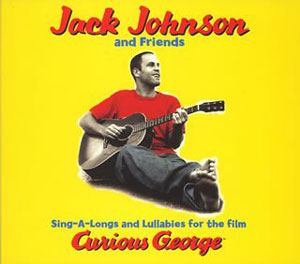 Somethings go together, like rapsberry jam and butter on sourdough toast. Other things don't fit so well, at least on the surface. I came across this latest offering from Jack Johnson while searching for some Ben Harper music. But it would be better to say, "I stumbled upon it;" because I did stumble spiritually by starting to think ill thoughts of Jack for working on this project in the first place. I mean seeing this soundtrack by Jack Johnson for this movie was much along the lines of running into Queen Elizabeth while at a strip joint or at the neighbourhood drug dealer's home: "...... excuse me, what are you doing here....moreover, why am I here?" Consider that even my children wouldn't want to see the movie for this soundtrack. And that shows good taste. Does anyone know whether this music is worth checking out? I like Jack Johnson's music, but I hesitate with this Curious George soundtrack. Let me know what you know in the comments.
2006-03-23
Woe unto them that call evil good
Is. 5:20 reads like a sword of war against equivocation:
This reversal of values and equivocation continues in our time: . 'Woe unto them that call evil good,' but that is exactly what we have done. We have lost our spiritual focus and reversed our sense of what is virtuous:
We have exploited the poor and called it the lottery. We have rewarded laziness and called it welfare.
We have killed our unborn and called it choice. We have shot abortionists and called it justifiable. We have neglected to discipline our children and called it building self esteem. We have abused power and called it politics. We have coveted our neighbor's possessions and called it ambition. We have polluted the air with profanity and pornography and called it freedom of expression. We have ridiculed the time-honoured virtues of our forefathers and called it enlightenment.
Reading Isaiah is a good way to put a stop to the spiritual wickedness which is equivocation.
Washing clean the concepts we think with and the words we use to express our concepts with is necessary.
This is when it is wise to recall Christ's saying about "Yea and Nay".
In my En.11 classes we are studying Macbeth wherein this concept of equivocating is very important to understanding how Shakespeare uses the speech of the witches to characterize them as being evil. Hence, anyone who speak such-and-such a way, is that way as a person. Accordingly when we first meet Macbeth, he equivocates, saying, "So foul and fair a day I have not seen." As the story continues the equivocation takes on more serious consequences than merely suggesting there is no distinction between good and foul weather.
Woe unto them that call evil good, and good evil; that put darkness for light, and light for darkness; that put bitter for sweet, and sweet for bitter!

This reversal of values and equivocation continues in our time: . 'Woe unto them that call evil good,' but that is exactly what we have done. We have lost our spiritual focus and reversed our sense of what is virtuous:
We have exploited the poor and called it the lottery. We have rewarded laziness and called it welfare.
We have killed our unborn and called it choice. We have shot abortionists and called it justifiable. We have neglected to discipline our children and called it building self esteem. We have abused power and called it politics. We have coveted our neighbor's possessions and called it ambition. We have polluted the air with profanity and pornography and called it freedom of expression. We have ridiculed the time-honoured virtues of our forefathers and called it enlightenment.
Reading Isaiah is a good way to put a stop to the spiritual wickedness which is equivocation.
Washing clean the concepts we think with and the words we use to express our concepts with is necessary.
This is when it is wise to recall Christ's saying about "Yea and Nay".
2006-03-22
OpenBSD 3.9 on May 1st.

Pre-orders are up for 3.9, so you can all whip out your plastic and support the project. The artwork theme this time is a supremely cool "attack of the binary blob" with a nifty "Stop BLOB!" shirt, aimed against the increasing proliferation of vendor supplied unmaintainable inscrutable binary blob drivers. Wear yours with pride and stick your favourite assinine vendor logo on the back in the blob (now where is my nvidia swag?).
2006-03-21
To School on a Fire Engine
 luke and i and two of his friends took a ride to school today on this fire engine. it was cool; we were able to sound the siren, wear fire fighter helmuts, sit in the driver's seat and hang out with two of fort langley's finest fire fighters. when they dropped luke and his buddies off at school, the boys had had a good 30 minute tour. i enjoyed watching luke's face as they arrived at school, being the envy of most other young dudes. he and his friends were 'it' for a brief moment. but that's what happens when you get a lift to school on a fire engine!
and me in all this? i was just a schmuck who had to walk home after being dropped off at my son's school :P
2006-03-17
St. Ephraim

When it came time to name my son I suggested to my wife that one of his middle names be Ephraim, after a great Syrian saint. The name means 'fruitful' or 'prosperous' in its Hebrew etymology and I thought that was a very strong reason for giving my son this as one of his middle names. I am glad Ramone agreed, though her reasons were founded more on the great spiritual insight found in the Lenten prayer composed by St. Ephraim:
O God, cleanse me, a sinner.
O Lord and Master of my life,
take from me the spirit of laziness,
despair, lust for power and idle talk.
But rather the spirit of chastity, humility,
patience and love to your servant.
Yea, O Lord and King,
grant me to see my own sins
and not to judge my brother:
for you are blessed
unto the ages of ages.
O God, cleanse me, a sinner.
Amen.
My favourite line of Saint Ephraim's is from his second of nineteen Hymns on the Nativity of Christ in the Flesh, wherein he writes: "Blessed be the Fruit, Who lowered Himself to fulfill our hunger!" What literary critic would not be drop-jawed at that figure of speech?!
One of St. Ephraim's re-occurring figures of speech is that of Christ as painting a self-image. Speaking of the Jewish law, the Gospels, and nature, he wrote:
You have mixed them together as paints for
your portrait; you have looked at yourself,
and painted your own portrait.
Here is the painter, who in himself has painted
his Father's portrait,
two portrayed, the one in the other...
you in your coming brought it to completion.
Here are a couple photos of the church to which St. Ephraim devoted so much of his energy and a snippet from Wikipedia on St. Ephraim:


Ephraim was born around the year 306, in the city of Nisibis (the modern Turkish town of Nusaybin, on the border with Syria). Internal evidence from Ephraim's hymnody suggests that both his parents were part of the growing Christian community in the city, although later hagiographers wrote that his father was a pagan priest. Numerous languages were spoken in the Nisibis of Ephraim's day, mostly dialects of Aramaic. The Christian community used the Syriac dialect. Various pagan religions, Judaism and early Christian sects vied with one another for the hearts and minds of the populace. It was a time of great religious and political tension. The Roman Emperor, Diocletian had signed a treaty with his Persian counterpart, Nerses in 298 that transferred Nisibis into Roman hands. The savage persecution and martyrdom of Christians under Diocletian were an important part of Nisibene church heritage as Ephrem grew up.
Jacob, the first bishop of Nisibis was appointed in 308, and Ephraim grew up under his leadership of the community. Jacob of Nisibis is recorded as a signatory at the First Council of Nicea in 325. Ephraim was baptized as a youth, and almost certainly became a son of the covenant, an unusual form of Syrian proto-monasticism. Jacob appointed Ephraim as a teacher (Syriac malp̄ānâ, a title that still carries great respect for Syriac Christians). He was ordained as a deacon either at his baptism or later. He began to compose hymns and write biblical commentaries as part of his educational office. In his hymns, he sometimes refers to himself as a 'herdsman' (`allānâ), to his bishop as the 'shepherd' (rā`yâ) and his community as a 'fold' (dayrâ). Ephraim is popularly credited as the founder of the School of Nisibis, which in later centuries was the centre of learning of the Church of the East.
In 337, Emperor Constantine I, who had legalised and promoted the practice of Christianity in the Roman Empire, died. Seizing on this opportunity, Shapur II of Persia began a series of attacks into Roman North Mesopotamia. Nisibis was besieged in 338, 346 and 350. During the first siege, Ephraim credits Bishop Jacob as defending the city with his prayers. Ephraim's beloved bishop died soon after the event, and Babu led the church through the turbulent times of border skirmishes. In the third siege, of 350, Shapur rerouted the River Mygdonius to undermine the walls of Nisibis. The Nisibenes quickly repaired the walls while the Persian elephant cavalry became bogged down in the wet ground. Ephraim celebrated what he saw as the miraculous salvation of the city in a hymn which portrayed Nisibis as being like Noah's Ark, floating to safety on the flood.
One important physical link to Ephraim's lifetime is the baptistery of Nisibis. The inscription tells that it was constructed under Bishop Vologeses in 359. That was the year that Shapur began to harry the region once again. The cities around Nisibis were destroyed one by one, and their citizens killed or deported. The Roman Empire was preoccupied in the west, and Constantius and Julian, struggled for overall control. Eventually, with Constantius dead, Julian the Apostate began his march into Mesopotamia. He brought with him his increasingly stringent persecutions of Christians. Julian began a foolhardy march against the Persian capital, Ctesiphon, where, overstretched and outnumbered, he was forced into an immediate retreat back along the same road. Julian was killed defending his retreat, and the army elected Jovian as the new emperor. Unlike his predecessor, Jovian was a Nicene Christian. He was forced by circumstances to ask for terms from Shapur, and conceded Nisibis to Persia, with the provision that the city's Christian community would leave. Bishop Abraham, the successor to Vologeses, led his people into exile.
Ephraim found himself among a large group of refugees that fled west, first to Amida (Diyarbakır), and eventually settling in Edessa (modern Şanlıurfa) in 363. Ephraim, in his late fifties, applied himself to ministry in his new church, and seems to have continued his work as a teacher, perhaps in the School of Edessa. Edessa had always been at the heart of the Syriac-speaking world and the city was full of rival philosophies and religions. Ephraim comments that Orthodox Nicene Christians were simply called 'Palutians' in Edessa, after a former bishop. Arians, Marcionites, Manichees, Bardaisanites and various Gnostic sects proclaimed themselves as the true church. In this confusion, Ephraim wrote a great number of hymns defending Nicene Orthodoxy. A later Syriac writer, Jacob of Serugh, wrote that Ephraim rehearsed all-female choirs to sing his hymns set to Syriac folk tunes in the forum of Edessa. After a ten-year residency in Edessa, in his sixties, Ephraim succumbed to the plague as he ministered to its victims. The most reliable date for his death is 9 June 373.
2006-03-13
OpenBSD info & link

If you were ever curious about the operating system I have sometimes posted
about or alluded to by mentioning 'Puffy', then just check out this short interview. It is in .avi format.
2006-03-10
In memory of Simone Weil
While reading this poem Simone Weil had the experience of the presence of Christ. I hope that in reading "Love" by George Herbert, you might get at least a sense of what Simone Weil experienced.
Love
Love bade me welcome, yet my soul drew back,
Guilty of dust and sin.
But quick-ey'd Love, observing me grow slack
From my first entrance in,
Drew nearer to me, sweetly questioning
If I lack'd anything.
"A guest," I answer'd, "worthy to be here";
Love said, "You shall be he."
"I, the unkind, the ungrateful? ah my dear,
I cannot look on thee."
Love took my hand and smiling did reply,
"Who made the eyes but I?"
"Truth, Lord, but I have marr'd them; let my shame
Go where it doth deserve."
"And know you not," says Love, "who bore the blame?"
"My dear, then I will serve."
"You must sit down," says Love, "and taste my meat."
So I did sit and eat.
Love
Love bade me welcome, yet my soul drew back,
Guilty of dust and sin.
But quick-ey'd Love, observing me grow slack
From my first entrance in,
Drew nearer to me, sweetly questioning
If I lack'd anything.
"A guest," I answer'd, "worthy to be here";
Love said, "You shall be he."
"I, the unkind, the ungrateful? ah my dear,
I cannot look on thee."
Love took my hand and smiling did reply,
"Who made the eyes but I?"
"Truth, Lord, but I have marr'd them; let my shame
Go where it doth deserve."
"And know you not," says Love, "who bore the blame?"
"My dear, then I will serve."
"You must sit down," says Love, "and taste my meat."
So I did sit and eat.
2006-03-09
Beginning....a puzzle.
A man went searching for the beginning of the road he was traveling. He traced his footsteps back the way he had come, until he came to where he started. But the beginning of the road was not a beginning. Something lay on the far side of the road's beginning, a beginning before the beginning. And the road had no sooner begun than the beginning was over, and the road itself appeared.
There was a man who sought a spring. He wanted to locate a spring that was nothing but a spring, not a spring that had a stream of water flowing from it from it. No matter where he searched, he found only springs with streams. He could not find a pure spring, a spring uncorrupted by a supplemental flow of water.
He went home in despair, and on his way met the man looking for the beginning of the road. They found a roadside tavern, and went in for a pint.
There was a man who sought a spring. He wanted to locate a spring that was nothing but a spring, not a spring that had a stream of water flowing from it from it. No matter where he searched, he found only springs with streams. He could not find a pure spring, a spring uncorrupted by a supplemental flow of water.
He went home in despair, and on his way met the man looking for the beginning of the road. They found a roadside tavern, and went in for a pint.
...do battle against him...
The self-evidencing power of truth.
The word of truth is free, and carries its own authority, disdaining to fall under any skilful argument, or to endure the logical scrutiny of its hearers. But it would be believed for its own nobility, and for the confidence due to Him who sends it. Now the word of truth is sent from God; wherefore the freedom claimed by the truth is not arrogant. For being sent with authority, it were not fit that it should be required to produce proof of what is said; since neither is there any proof beyond itself, which is God. For every proof is more powerful and trustworthy than that which it proves; since what is disbelieved, until proof is produced, gets credit when such proof is produced, and is recognised as being what it was stated to be. But nothing is either more powerful or more trustworthy than the truth; so that he who requires proof of this is like one who wishes it demonstrated why the things that appear to the senses do appear. For the test of those things which are received through the reason, is sense; but of sense itself there is no test beyond itself. As then we bring those things which reason hunts after, to sense, and by it judge what kind of things they are, whether the things spoken be true or false, and then sit in judgment no longer, giving full credit to its decision; so also we refer all that is said regarding men and the world to the truth, and by it judge whether it be worthless or no.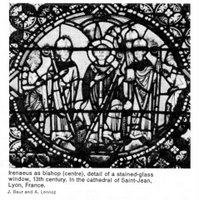 But the utterances of truth we judge by no separate test, giving full credit to itself. And God, the Father of the universe, who is the perfect intelligence, is the truth. And the Word, being His Son, came to us, having put on flesh, revealing both Himself and the Father, giving to us in Himself resurrection from the dead, and eternal life afterwards. And this is Jesus Christ, our Saviour and Lord. He, therefore, is Himself both the faith and the proof of Himself and of all things. Wherefore those who follow Him, and know Him, having faith in Him as their proof, shall rest in Him. But since the adversary does not cease to resist many, and uses many and divers arts to ensnare them, that he may seduce the faithful from their faith, and that he may prevent the faithless from believing, it seems to me necessary that we also, being armed with the invulnerable doctrines of the faith, do battle against him in behalf of the weak.
There is nothing like St. Irenæus to get me more firmly behind the Lenten discipline; I hope his manly logic lifted your spirits a bit.
The word of truth is free, and carries its own authority, disdaining to fall under any skilful argument, or to endure the logical scrutiny of its hearers. But it would be believed for its own nobility, and for the confidence due to Him who sends it. Now the word of truth is sent from God; wherefore the freedom claimed by the truth is not arrogant. For being sent with authority, it were not fit that it should be required to produce proof of what is said; since neither is there any proof beyond itself, which is God. For every proof is more powerful and trustworthy than that which it proves; since what is disbelieved, until proof is produced, gets credit when such proof is produced, and is recognised as being what it was stated to be. But nothing is either more powerful or more trustworthy than the truth; so that he who requires proof of this is like one who wishes it demonstrated why the things that appear to the senses do appear. For the test of those things which are received through the reason, is sense; but of sense itself there is no test beyond itself. As then we bring those things which reason hunts after, to sense, and by it judge what kind of things they are, whether the things spoken be true or false, and then sit in judgment no longer, giving full credit to its decision; so also we refer all that is said regarding men and the world to the truth, and by it judge whether it be worthless or no.
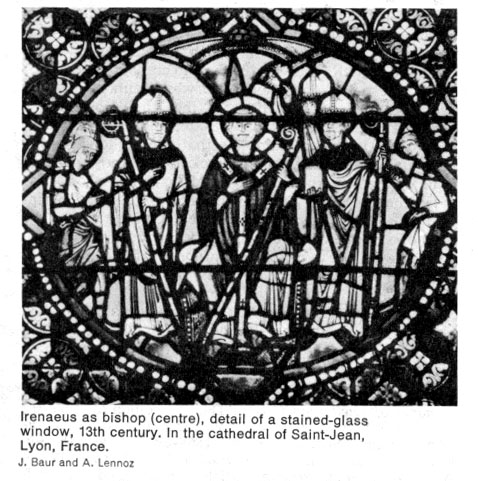 But the utterances of truth we judge by no separate test, giving full credit to itself. And God, the Father of the universe, who is the perfect intelligence, is the truth. And the Word, being His Son, came to us, having put on flesh, revealing both Himself and the Father, giving to us in Himself resurrection from the dead, and eternal life afterwards. And this is Jesus Christ, our Saviour and Lord. He, therefore, is Himself both the faith and the proof of Himself and of all things. Wherefore those who follow Him, and know Him, having faith in Him as their proof, shall rest in Him. But since the adversary does not cease to resist many, and uses many and divers arts to ensnare them, that he may seduce the faithful from their faith, and that he may prevent the faithless from believing, it seems to me necessary that we also, being armed with the invulnerable doctrines of the faith, do battle against him in behalf of the weak.
There is nothing like St. Irenæus to get me more firmly behind the Lenten discipline; I hope his manly logic lifted your spirits a bit.
2006-03-02
Epistle of Mathetes to Diognetus
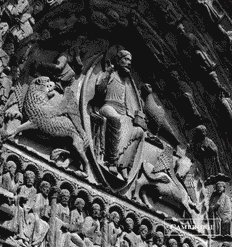
This epistle admirably illustrates the temper taught by St. Paul (2 Tim. ii. 24), and not less the peculiar social relations of converts to the Gospel. Mathetes was possibly a catechumen of St. Paul or of one of the apostles. Many scholars think that his correspondent, Diognetus, was the tutor of M. Aurelius. The author names himself as Mathetes, but no one can say more of his identity. What interests me is the description he gives of early Church communities. Do you think Mathetes is describing the communities in an ideal or realistic manner? I am inclined to think 'both' for my answer. Read this excerpt and decide for yourself:
For the Christians are distinguished from other men neither by country, nor language, nor the customs which they observe. For they neither inhabit cities of their own, nor employ a peculiar form of speech, nor lead a lifewhich is marked out by any singularity. The course of conduct which they follow has not been devised by any speculation or deliberation of inquisitive men; nor do they, like some, proclaim themselves the advocates of any merely human doctrines.But, inhabiting Greek as well as barbarian cities, according as the lot of each of them has determined, and following the customs of the natives in respect to clothing, food, and the rest of their ordinary conduct, they display to us their wonderful and confessedly striking method of life. They dwell in their own countries, but simply as sojourners. As citizens, they share in all things with others, and yet endure all things as if foreigners. Every foreign land is to them as their native country, and every land of their birth as a land of strangers. They marry, as do all others; they beget children; but they do not destroy their offspring. They have a common table, but not a common bed. They are in the flesh, but they do not live after the flesh. They pass their days on earth, but they are citizens of heaven. They obey the prescribed laws, and at the same time surpass the laws by their lives. They love all men, and are persecuted by all. They are unknown and condemned; they are put to death, and restored to life. They are poor, yet make many rich; they are in lack of all things, and yet abound in all; they are dishonoured, and yet in their very dishonour are glorified. They are evil spoken of, and yet are justified; they are reviled, and bless; they are insulted, and repay the insult with honour; they do good, yet are punished as evil-doers. When punished, they rejoice as if quickened into life; they are assailed by the Jews as foreigners, and are persecuted by the Greeks; yet those who hate them are unable to assign any reason for their hatred.
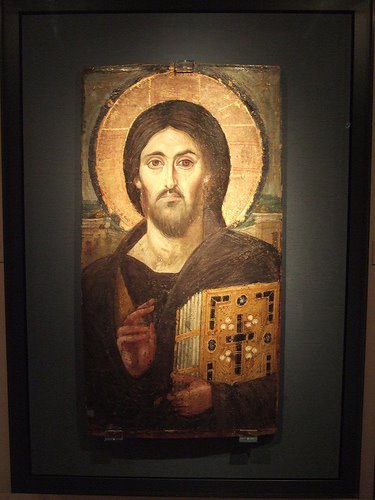
So we read about surpassing the legal expectations of the secular laws; not destroying our babies; not condoning adultery. These three stand out as extremely early representations of Orthodox ethical notions. Also, the whole attitude of turning the other cheek and being rich through having little bleeds throughout the epistle and it astounds and inspires me. This epistle is a lot like the Didache in that it is more revelant and fresh than even the morning news! Why is it that Irenaeus, Ignatius and Clement are still such manly and pertinent figures?
2006-02-26
Bad Hair and other Hard Truths
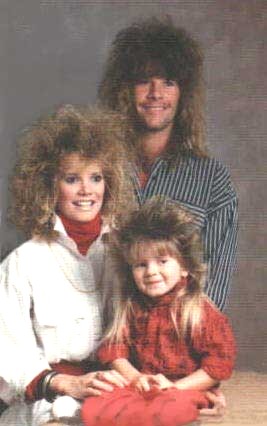 Let's be straight about this image: these people have spent way too much time grooming way too much hair with way too much hair spray. I mean the hard truth is that the hair style evident here is so 'jungle frew-frew' it is just begging to be hacked back. You'd need a weed whacker to take off enough to make a visible difference. I have no idea who decided that this style of hair was groovy, but we'd all agree that this way of setting hair is just embarrassing. But it is a hard truth -- albeit a funny hard truth -- to admit that many normal, hard-working middle-class folks in the 1970s actually thought this style rocked: anyone recall the Bay City Rollers? And do look more closely at the photo: doesn't that young family seem delighted with their 'jungle frew-frew' hairdos? You better believe it! "S-A-T-U-R-D-A-Y Night!" or "Let the good times roll...let them brush your rock 'n' roll hair, let them leave you up in the air..." Oh the frew-frew jungle blues!
Some truths are hard to grasp while others are hard to take in because they demand of us a difficult course of action or choice. Most hard truths follow the latter description, involving so much more than dealing with evidence that clearly shows you had an extremely poor sense of aesthetic judgment. Indeed, the hardest truths I can think of are these:
1. there is no eternal security; we must trust only in Christ's mercy
2. the two ultimate choices: we saying "yes" to God's will or God saying "yes" to our will.
3. not everyone will find blessedness
4. heaven may involve even longer and more frequent liturgies :p
5. you must hold your hands out in love to those you dislike
What are the hardest truths for you?
2006-02-25
Unrelated remarks

A while ago we went to see the Picasso exhibit at the Vancouver Art Gallery. It amazes me that Picasso was so successful in his own lifetime; he was wealthy and lived a life of luxury and ease. This painting of the bombing of the Basque village, Guernica, has always held my imagination in horror. When someone asks me whether the beautiful is to be equated with that which gives pleasure, I always use this painting in my answer. For this work is beautiful but it gives me no pleasure at all; in contemplating the images, you will notice only horror, loss and brutuality. Hardly giving a normal manly man pleasure. Therefore the beautiful is not another way of saying 'that which gives pleasure'.
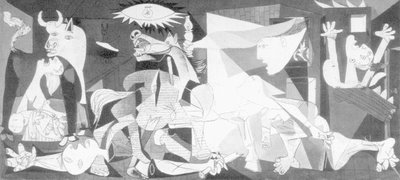 What do you think the Latin lettering is for?
2006-02-21
Winter Frost
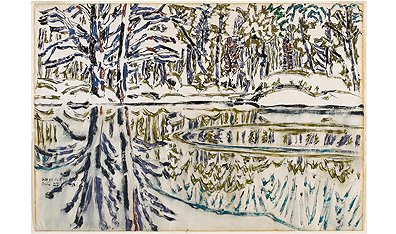 The Winter Olympics are running and Canada has owned the rink. It is rather lame that we haven't excelled that well in snowboarding. One bronze medal is lame for a snowboarding capital of the world! In hockey we are starting to get business accomplished; our women's hockey team has won the gold! Truly they seemed unbeatable. Our men are having a tough time getting to be a 'team'. Perhaps a few set-backs will do them good service: it may pull them closer together. The men's team needed a slap upside the head and both the Swiss and the Finns delivered a couple of smashing wake-you-up uppercuts. I think the Canuckleheads will pull together as a manly national team should; and I hope we get to see our manly squad play in the final, crushing the Finns. Oh, baby, that would be better than butter on a fresh cinnamon bun!
This frosty watercolor painting is lovely. It reminds me of the winters during my youth when we used to get more snowfall.
2006-02-20
OliveBSD
 Go get it here. Burn that onto a cd and then you can boot up OpenBSD 3.8 with a nice graphical user interface. It is an easy and free way to use the most secure operating system currently available. As an aside, olive trees are remarkable in that they bloom prior to growing their leaves. It was this trait that made it the species to represent the White Tree of Gondor in The Return of the King. I sometimes enjoy imagining what those White Trees of Valinor would have looked like in all their radiance.
2006-02-15
Quilts
This post is about quilts and why I love them. I want to say at the outset that it is very manly to enjoy quilts. The craftsmanship in making them is not for me to put down or joke at; I highly respect those who design and craft these comforting treasures. However, I am not advocating that manly men start doing this craft; but if you are faced with a choice between taking up quilting or taking up figure skating, I'd say the manly man would choose the former if faced with such a dilemma. Now let's view some of my favourite types.
I have always loved homemade quilts. These days the blankets that are commonly sold are lame in comparison. The industrial revolution ruined things for many an artisan, the textile craftsman not least. That said one can still find good, heavy quilts around. My father's mother was an avid quilt maker until her death. She made me 3 quilts throughout my childhood. The last one she crafted has served me for the last 26 years. And that quilt has seen 26 yrs. of steady use; it went with me to university, it lived through my life as a bachelor; it has been a joy to Ramone and I during our slumbertimes. I love -- absolutely love -- heavy, weighty and manly quilts made with a wool core. Oh baby, can you say Thomas go have a restful and content snooooooze? These old friendship quilts are superbly crafted.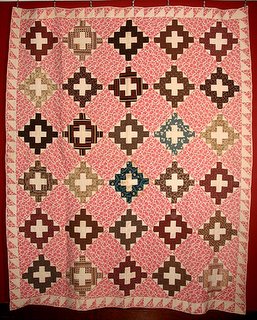 The crazy brokendishes design is by some old mennonites; I will forgive them for their theological errors because they made such splendid blankets. It is interesting to note in passing that my grandmother wouldn't have wrapped her or her children in a such a blanket because those perceived theological errors.
So close was a person to the work that its very presence was thought to be blessed or cursed by the form that the maker's mind crafted it with; and if in that mind there were theological or moral ideas that could contaminate other forms or ideas? Well, so much for resting contentedly in a mennonite blanket that could've been contaminated with bad religion. At least they took art extremely seriously!
I love this brokendish design which I am told was a favourite of mennonites; I can just picture my grandmother somehow enjoying the verbal irony of the quilt type and linking it to the followers of Menno Friesen.
This last quilt is a very heavy one, being made of wool. It is just the sort of blanket I would love to wrap myself up in.
The weight, the density of the material is not only warm and soothing, but also it helps to hold you still, suspended, care-free and gives you some respice at the close of a hard day's work.
Oh yea, bring it on! I can just see myself enjoying a good slumber under this one. I hope you enjoyed a peak at some of my favourite quilts.
I have always loved homemade quilts. These days the blankets that are commonly sold are lame in comparison. The industrial revolution ruined things for many an artisan, the textile craftsman not least. That said one can still find good, heavy quilts around. My father's mother was an avid quilt maker until her death. She made me 3 quilts throughout my childhood. The last one she crafted has served me for the last 26 years. And that quilt has seen 26 yrs. of steady use; it went with me to university, it lived through my life as a bachelor; it has been a joy to Ramone and I during our slumbertimes. I love -- absolutely love -- heavy, weighty and manly quilts made with a wool core. Oh baby, can you say Thomas go have a restful and content snooooooze? These old friendship quilts are superbly crafted.
 The crazy brokendishes design is by some old mennonites; I will forgive them for their theological errors because they made such splendid blankets. It is interesting to note in passing that my grandmother wouldn't have wrapped her or her children in a such a blanket because those perceived theological errors.
 So close was a person to the work that its very presence was thought to be blessed or cursed by the form that the maker's mind crafted it with; and if in that mind there were theological or moral ideas that could contaminate other forms or ideas? Well, so much for resting contentedly in a mennonite blanket that could've been contaminated with bad religion. At least they took art extremely seriously!
I love this brokendish design which I am told was a favourite of mennonites; I can just picture my grandmother somehow enjoying the verbal irony of the quilt type and linking it to the followers of Menno Friesen.
This last quilt is a very heavy one, being made of wool. It is just the sort of blanket I would love to wrap myself up in.
The weight, the density of the material is not only warm and soothing, but also it helps to hold you still, suspended, care-free and gives you some respice at the close of a hard day's work.
Oh yea, bring it on! I can just see myself enjoying a good slumber under this one. I hope you enjoyed a peak at some of my favourite quilts.
2006-02-12
Canadian Olympic Hockey: can we cheer?!
Our men's and women's teams are posed to defend the Gold; in the coming two weeks we expect to see a couple of scenes like this one:
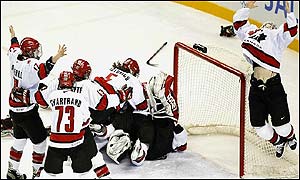
Let's forget about the figure skating, it is so lame and way too subjective. Remember 2002 when figure skating vomited all over itself on the international stage? I don't know why anyone likes to watch it anyway. It seems to attract mostly effeminate men to the sport. Think about it, what type of guy would rather go practise his ice dancing routine over going to a hockey practice or over going snowboarding??! Enough said; that was a rhetorical question, we know it is a Brokeback-Mountain sort of guy. Furthermore, who gives a rip about figure skating when compared to hockey or snowboarding or skiing? It bothers me that there are people who do not recognize just how lame and unmanly figure skating is; yet this fact only really bothers me because of the effect it has on the broadcasting of the olympic events. The CBC broadcasts hours of the artistic malarkey and they do so because lots of people want to see it. To me watching figure skating is on par with reading and valuing astrology or harnessing the creative energies of crystals. I mean let's get real, no manly man believes people can cast spells or that stars and planets have anything to do with how financial investiments will fare on a given day. "Oh, excuse me while I consult my $50.00 crystal to determine whether the 'creative energy' is right for investing with you...or to find out if I should cheer for the Russians or Chinese in ice dancing???!" It is all unmanly and terribly superstitious and full of horse hockey pucks! Give ice skating a rest, instead cheer for the hockey, snowboarding and skiing. Curling is much more manly than figure skating; they bang their rocks together to make a very manly sound: arggggh!
Or something like that :p
Go Team Canada!
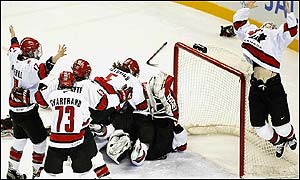
Let's forget about the figure skating, it is so lame and way too subjective. Remember 2002 when figure skating vomited all over itself on the international stage? I don't know why anyone likes to watch it anyway. It seems to attract mostly effeminate men to the sport. Think about it, what type of guy would rather go practise his ice dancing routine over going to a hockey practice or over going snowboarding??! Enough said; that was a rhetorical question, we know it is a Brokeback-Mountain sort of guy. Furthermore, who gives a rip about figure skating when compared to hockey or snowboarding or skiing? It bothers me that there are people who do not recognize just how lame and unmanly figure skating is; yet this fact only really bothers me because of the effect it has on the broadcasting of the olympic events. The CBC broadcasts hours of the artistic malarkey and they do so because lots of people want to see it. To me watching figure skating is on par with reading and valuing astrology or harnessing the creative energies of crystals. I mean let's get real, no manly man believes people can cast spells or that stars and planets have anything to do with how financial investiments will fare on a given day. "Oh, excuse me while I consult my $50.00 crystal to determine whether the 'creative energy' is right for investing with you...or to find out if I should cheer for the Russians or Chinese in ice dancing???!" It is all unmanly and terribly superstitious and full of horse hockey pucks! Give ice skating a rest, instead cheer for the hockey, snowboarding and skiing. Curling is much more manly than figure skating; they bang their rocks together to make a very manly sound: arggggh!
Or something like that :p
Go Team Canada!
2006-02-08
beauty
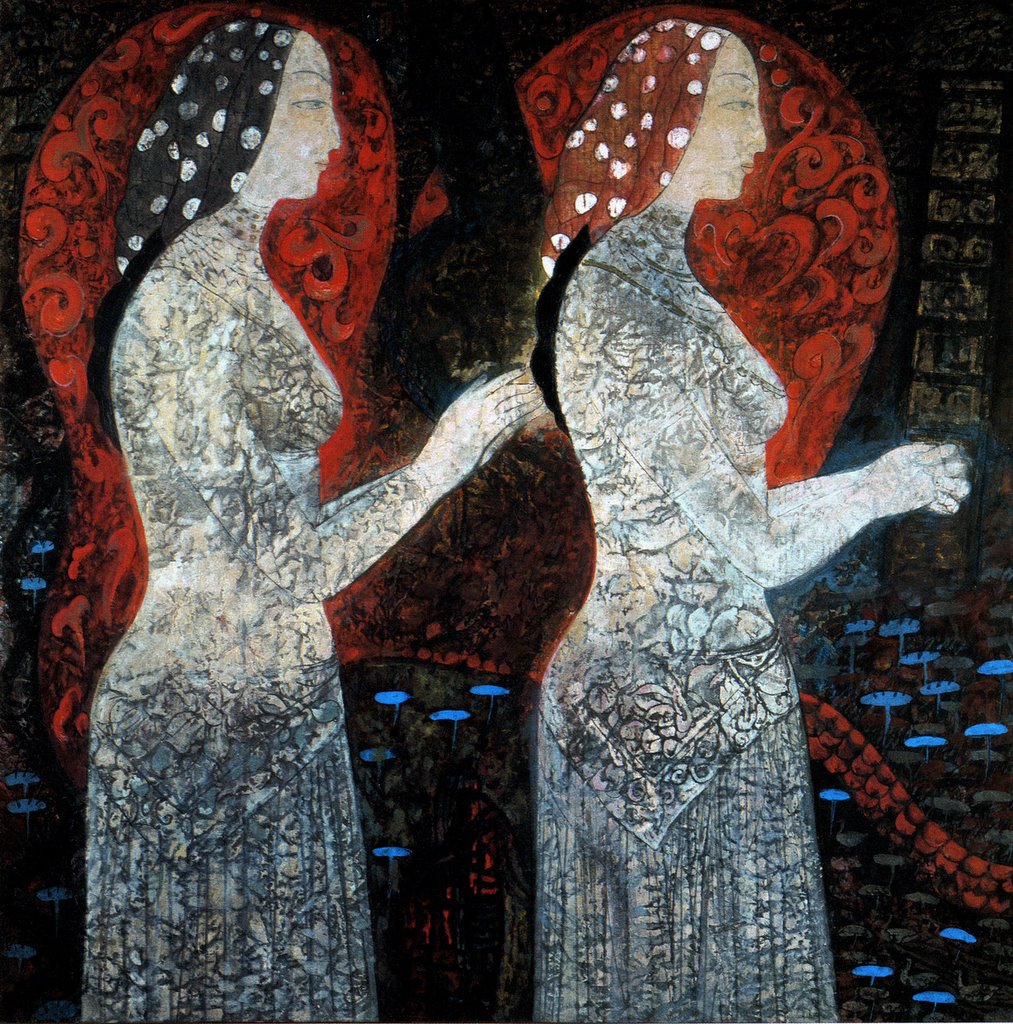 I came across this painting and thought others might like it, too. I am not sure why I like this picture. If you don't just click away from my post. If it catches your fancy or delights you, then try to explain what it is about the image that evokes your response. Enjoy.
2006-02-06
the four parts to a question: for Vic
4 jobs:
1. Teacher: I've taught for 15 years.
2. Gill Net Fisherman: I gill net fished for salmon for a couple of summers.
3. Seine Net Fisherman: I worked on board the Westview III for a couple of summers; I was a tie-up man or beachman. It was in the days when I was a fast runner: in gr.12 I ran a 100m sprint in 11.46s! And a good beachman had to haul his chops up and down slippery rocks, all the while looking for something to tie up on.
4. Burnaby Parks and Recreation: during the summer of Expo 86 I worked as a mobile playwriter. My partner and I would get a week to compose a skit, practise it, find costumes and props; then we would do two shows per day in two different parks per day (one am show, one pm show) over the next two weeks. Then we'd repeat the three week cycle again. We did a nine week stint to great reviews for all three skits! Hehe, it was my summer as Professor Percy Bumble, a bumbling inventor who had various adventures:) And I got to use a Burnaby Parks and Recreation Van to get around; at night I would hang out doing all sorts of silly things with my roomie, Tom Hooper, a bassist for the Grapes of Wrath.
4 movies I could watch over and over...
1. A Man for All Seasons (Paul Scofield)
2. The Godfather I/II (they are connected)
3. Ikiru/The Matrix
4. A River Runs Through It
4 places i've lived:
1. Vancouver: I went to Lord Kitchener Elementary K-3
2. Victoria: We lived on Thompson Bay Rd by Oak Bay Park Pre-school years
3. Toronto: Only there for gr. 3-4. I hated Toronto. I still do. It is a pussy-footed,
liberal-minded part of a wannabe-cultured city that has no culture that isn't superficial.
When we moved to Calgary for my gr.5-6, I could start to think and breath and do things in
the mountain heights!
4. Fort Langley: I live here and I love it; it is so groovy. Just ask Vic, she'll tell you how
cool it is.
4 albums:
1. Led Zeppelin I/II/III/IV
2. Neil Young: Harvest
3. John R. Cash: Live at Folsom Prison
4. So many others...Feist, Sarah Harmer, Bob Dylan, The Beatles, Nirvana: Bleach, The White
Stripes, Bach, Mozart, Billie Holiday, Bessie Smith, Coleman Hawkins, Louis Armstrong,
Pink Floyd, etc..
4 fiction writers:
1. C.S.Lewis
2. Tolkein
3. Joyce
4. Dostoevsky
4 poets:
1. Herbert
2. Homer/Pindar
3. Rumi
4. Donne
4 Playwriters:
1. Shakespeare
2. Robert Bolt
3. Sophocles
4. Anton Chekov
4 non-fiction writers:
1. Jean Danielou
2. Vladmir Lossky
3. CS Lewis
4. George Grant
4 Philosophers:
1. Plato
2. Aristotle
3. Thomas Aquinas
4. Simone Weil
4 heroes:
1. Christ
2. St. Paul
3. Mary, the mother of my Lord
4. any truly manly man
4 vacations:
1. Chaunigan Lake
---I have not been on a vacation as an adult other than to Chaunigan Lake.
4 foods:
1. Jim's Pizza: In Fort Langley. The Rustic Italian and House Special (with slight manly substitutions) Id Est, add feta to both; remove pineapple, add roasted garlic to the house special; remove tomato, add roasted garlic to the rustic italian. though the rustic is good with the tomato, but i just prefer the garlic because it is manlier. -edited so as to clarify matters for Victoria
2. Prime Rib
3. Greek Food
4. Chinese Food
4 places i'd rather be:
1. Fly Fishing
2. Not working
3. reading what I want
4. hanging out with friends
4 sites:
1. www.openbsd.org
2. www.undeadly.org
3. blogs I visit
4. google.ca and imdb.com
4 bloggers to whom i'm passing this burden:
1. luke
2. hannah
3. ramone
4. davido
1. Teacher: I've taught for 15 years.
2. Gill Net Fisherman: I gill net fished for salmon for a couple of summers.
3. Seine Net Fisherman: I worked on board the Westview III for a couple of summers; I was a tie-up man or beachman. It was in the days when I was a fast runner: in gr.12 I ran a 100m sprint in 11.46s! And a good beachman had to haul his chops up and down slippery rocks, all the while looking for something to tie up on.
4. Burnaby Parks and Recreation: during the summer of Expo 86 I worked as a mobile playwriter. My partner and I would get a week to compose a skit, practise it, find costumes and props; then we would do two shows per day in two different parks per day (one am show, one pm show) over the next two weeks. Then we'd repeat the three week cycle again. We did a nine week stint to great reviews for all three skits! Hehe, it was my summer as Professor Percy Bumble, a bumbling inventor who had various adventures:) And I got to use a Burnaby Parks and Recreation Van to get around; at night I would hang out doing all sorts of silly things with my roomie, Tom Hooper, a bassist for the Grapes of Wrath.
4 movies I could watch over and over...
1. A Man for All Seasons (Paul Scofield)
2. The Godfather I/II (they are connected)
3. Ikiru/The Matrix
4. A River Runs Through It
4 places i've lived:
1. Vancouver: I went to Lord Kitchener Elementary K-3
2. Victoria: We lived on Thompson Bay Rd by Oak Bay Park Pre-school years
3. Toronto: Only there for gr. 3-4. I hated Toronto. I still do. It is a pussy-footed,
liberal-minded part of a wannabe-cultured city that has no culture that isn't superficial.
When we moved to Calgary for my gr.5-6, I could start to think and breath and do things in
the mountain heights!
4. Fort Langley: I live here and I love it; it is so groovy. Just ask Vic, she'll tell you how
cool it is.
4 albums:
1. Led Zeppelin I/II/III/IV
2. Neil Young: Harvest
3. John R. Cash: Live at Folsom Prison
4. So many others...Feist, Sarah Harmer, Bob Dylan, The Beatles, Nirvana: Bleach, The White
Stripes, Bach, Mozart, Billie Holiday, Bessie Smith, Coleman Hawkins, Louis Armstrong,
Pink Floyd, etc..
4 fiction writers:
1. C.S.Lewis
2. Tolkein
3. Joyce
4. Dostoevsky
4 poets:
1. Herbert
2. Homer/Pindar
3. Rumi
4. Donne
4 Playwriters:
1. Shakespeare
2. Robert Bolt
3. Sophocles
4. Anton Chekov
4 non-fiction writers:
1. Jean Danielou
2. Vladmir Lossky
3. CS Lewis
4. George Grant
4 Philosophers:
1. Plato
2. Aristotle
3. Thomas Aquinas
4. Simone Weil
4 heroes:
1. Christ
2. St. Paul
3. Mary, the mother of my Lord
4. any truly manly man
4 vacations:
1. Chaunigan Lake
---I have not been on a vacation as an adult other than to Chaunigan Lake.
4 foods:
1. Jim's Pizza: In Fort Langley. The Rustic Italian and House Special (with slight manly substitutions) Id Est, add feta to both; remove pineapple, add roasted garlic to the house special; remove tomato, add roasted garlic to the rustic italian. though the rustic is good with the tomato, but i just prefer the garlic because it is manlier. -edited so as to clarify matters for Victoria
2. Prime Rib
3. Greek Food
4. Chinese Food
4 places i'd rather be:
1. Fly Fishing
2. Not working
3. reading what I want
4. hanging out with friends
4 sites:
1. www.openbsd.org
2. www.undeadly.org
3. blogs I visit
4. google.ca and imdb.com
4 bloggers to whom i'm passing this burden:
1. luke
2. hannah
3. ramone
4. davido
2006-02-04
Boom, drizzle, crack! and some baby talk...
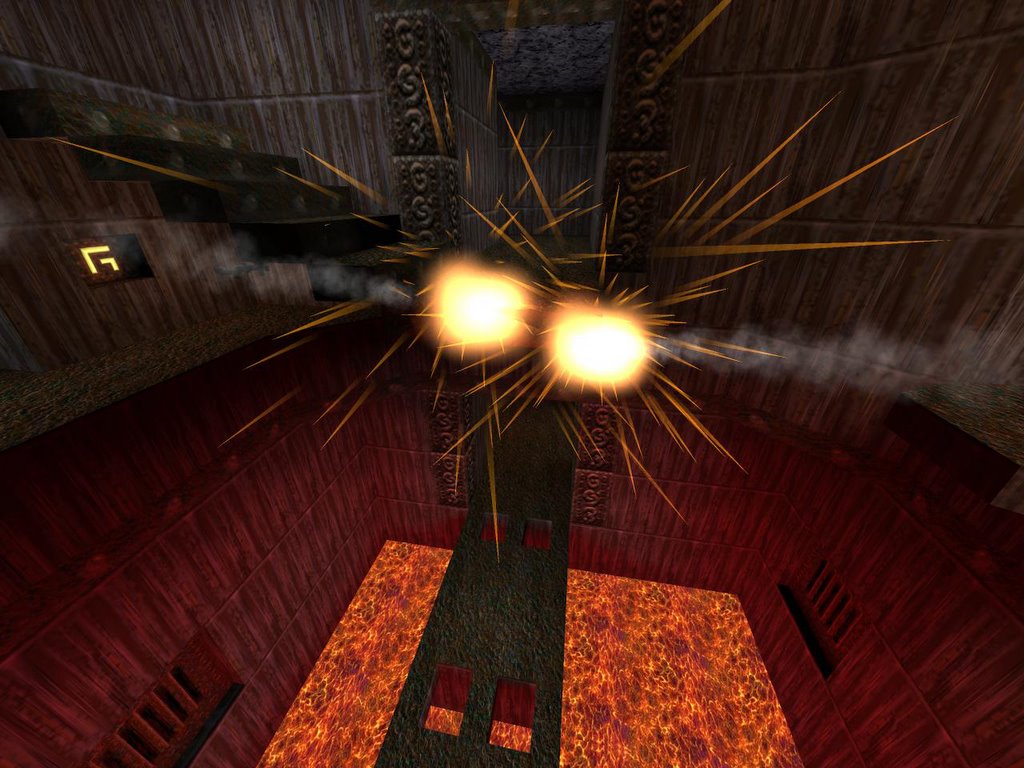 I love the wind and the rain; and I love chocolate and cinnamon buns. But too much of a good thing is too much, excessive, over-done, a lot of plenty, etc., etc.. I heard that twins have been born to Deanna and Peter; moreover I am given to understand that the boy is named Thomas. I'd like to congratulate the parents on having the good sense to use such a manly name. The baby girl's name is Elizabeth; and I do have a fondness for that name, too, even though I do not utilize the name. Thomas the baby: what an outstanding name to grow up with and to grow into. Arrrgggh!
 Gabe and Amy had a boy with a fine name, too: Owen. What is especially cool about the Little O-man's name is the pronounciation of the initials of his three given or Christian names: O + P + E or 'Oppie'; as, for instance, in the little kid played by Ron Howard on the old Andy Griffith Show. Owen is one of my favourite names. In fact, if Ramone and I were to have a divinely sent accident in the form of another male baby, we'd probably name him Henry Owen Thomas; and yes he'd be one HOT! baby I am sure!
Congratulations to Amy, Gabe, Peter and Deanna on the recent arrivals. May you be given the strength, honour and wisdom to raise them well!
I sure do hope to see some sunshine soon.
2006-02-02
word cloud
Here you go Vic and KimRB, I did this post for you two. I don't know if it reveals anything other than that I end up with cinnamon buns smack dab in the middle of these words...a sublime message perhaps???

Bell X1
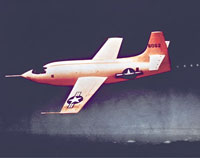 In this post I will tell you about a model jet Luke and I will build in the coming weeks. I bought a model of this Bell X1 jet for my son Luke. The Bell X1 was the first jet to break the sound barrier on October 14, 1947; Chuck Yeager was the pilot. This weekend we will buy the cement and orange paint for it. Luke is quite excited about putting it together. I like working on modelling projects with Luke; he has loads of patience for a guy his age and takes instructions well. Being teachable is such a virtue and is a sure sign of intellectual humility. Moreover, he has steady hands and an eye for detail. As he grows older I am sure he will learn to anticipate what is needed in a working situation better than he does currently. He's not bad at anticipating, but he needs to refine his observation skills and 'read' situations more accurately. I am well-pleased with my son and his manly progress into becoming a young man!
This weekend Ramone goes in for a MRI on her back at St. Paul's Hospital. Lord, I hope all is well! I don't want to go down that bad-back road again. Please do offer a pray up on behalf of my wife's back; she's already had numerous back surgeries and we don't need any further hospital time.
While we are in town Hannah and I will pick up some Chuck Taylor's; argggh! manly cruisers indeed! Hannah wants to get navy or brown low cuts so they match anything she wears, while I will go for a cream colored set of high tops. Yes, I am so harsh and stylish.
Well I think that's enough manliness for this entry. Here's a cool blog to check out. She wrote an interesting article on Islam and Free Speech and constantly updates her blog with details of an ongoing series of apartment renovations and informative shots of Leith, Edinburgh. Enjoy...
2006-01-31
not sure what to write anymore...
 this circle of confusion is a figure for my current mind set on blogging. i wrote two other posts about a popular gay cowboy movie currently enjoying rave reviews, but ramone had me delete them because she felt my views were too politically incorrect and dangerous to my employment situation. i thought they were both thoughtful, carefully considered and rather funny. but i trust my wife's insight.
 this incident has made me post shy; and this bothers me, leaving me somewhat confused. furthermore, it makes me feel as though what i am thinking through is unimportant and on a lower level of spiritual priority than what ramone or other more spiritual folks are working through in their writing. i don't deny this, but it bothers me nevertheless. in addition, i read a post over on stacy's site and was going to leave a comment about my experience with special ed students but thought, "no, write nothing, it might offend." accordingly i am not sure whether i should write anything about what i truly think about controversial matters. it would seem the wisest move is to remain taciturn. i will just have to find another outlet. so that is what i am going to do; as such i will just write about OpenBSD and other stuff that won't easily offend anyone unless they are silly enough to use microsoft windows :p
2006-01-26
a 30h fast: hunger bites, bite back!

Today my school was awarded the highest honour a school can get. No, it wasn't for scholastic merit or for athletics; both of those are very important but are not of the highest honour. Honour must be conferred on that which is the most difficult, challenging action. Also the action must be an action especially pleasing to God if it is to be worthy of the highest honour; for who else can determine what is ultimately honorable? All else is relative and given to folly. To be recognized as compassionate is the highest honour for it is based on the love of one's neighbour, the greatest love according to my Lord; all schools could've accomplished what we did, but they lacked the will to do it. World Vision awarded my school's collective will power today. Last year we raised more money for famine relief in Africa than in any other school in Delta or BC or Canada! That includes very rich private schools like St. George's or Upper Canada College! If they had willed to they could have easily put our humble efforts to shame -- and this is where the full manliness of the honour we earned for our little high school kicks in -- but they didn't will it to be done, whereas we did. I am thankful to work at a school where we are honored for our compassion.
This year we will do the 30h famine again for Rwanda. I pray that this will help some Rwandans and that it helps to cleanse and make more loving hearts in the students who participate. O, Lord have mercy!
2006-01-24
the best cinnamon buns in the world?
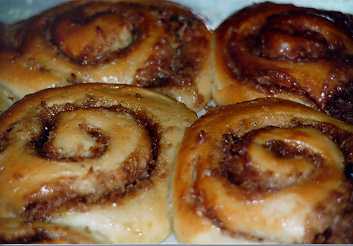 Fresh cinnamon buns are one of my favourite desserts. I should emphasize that I have some good friends who make awesome cinnamon buns. My wife does not make me cinnamon buns; this is a good thing, for if she did I'd be a whole ton more than I am currently. But on my birthday Kim RB made me some caramel covered cinnamon buns. Arrrrgh, so manly and delicious. Victoria makes a type of cream cheese covered cinnamon buns....oh, they are so good, I'd expect that they are straight from heaven's bakery!
2006-01-18
The Old Morris Tobbaco Shop

The Old Morris Tobbaco shop was established in 1892 on its present site and is one of British Columbia's finest examples of how a shop should be set up. I love to enter Old Morris and let my nose wander.
As you enter the shop, you can glance overhead at the fine examples of leaded glass in the domed entrance and the Alabaster arch and pillars framing the doorway. Though, beyond all other sensory input, your mind can not but focus on the fragrant tobbaco scents wafting through the air. Aaaahh, such a sure sign of God's goodness, much as chocolate or coffee or fresh cinnamon buns.
In 1910, the interior of the store was remodeled, with mahogany fixtures, mirrors and a walk in humidor were added. These fixtures add a definite sense of time and place to the shop.
The Alabaster cigar lighter that stands in the center of the floor is delightful and full of deep magic. You can purchase all manner of cigars and pipe tobbaco from Old Morris. For Pascha and at Christ's Nativity, I often buy my 'mild and mello' blend online. I must add that it is smashing in a hobbit pipe with a little bit of wine or scotch! So fine, indeed; a texture like sun.
2006-01-16
George Grant and despair; for the practical man
 George Grant has been a hero of mine since I was first introduced to him through my High School Latin teacher. Mr. Wilson photocopied a CBC Ideas transcript for me, and I found his ideas about technology, the enlightenment period, and the role of the love of goodness very intriguing. What Grant had to say about Simone Weil, Nietzsche and Heidegger fascinated me, too, but I didn't know what he was really talking about back then. Yet when I went on to study classical philosophy (that is, the pre-socratics, Plato and Aristotle) as part of my undergraduate degree, I found myself often going back to find out what George Grant had to say about certain ideas and the classical thinkers and their relationship to this post-enlightenment world. So often I found his views to dovetail with my own that I thought there was some sort of mental tie. Though Grant dabbled in the subtle platonic theory about forms and the ontological basis for them in the idea of the good, the most profound thing he ever wrote was at the end of Lament For A Nation, where Grant wrote about a notion that is near to my heart: the relation between the certainty of the saint and the hopeless, despairing unbeliever to a regular, wanna-be-manly chap like myself. Now men who truly despair don't write poetry, plays or novels; suicide is the act of a man who has no hope. Such is the despondent extreme when viewed unromantically. Few see no hope at all; but, once again, few ever attain the certainty of the holy. They are rare who greet all horrific events and losses of good with the cheerful knowledge that all changes in the world take place within an eternal order that is not affected by them. Somewhere in between these two poles are the vast majority. Accordingly to Grant, "if one cannot be sure about the answer to the most important questions, then tradition is the best basis for the practical life." Such is one of the fundamental precepts that I live by, and though it is a simple idea it is profound and rich. For it allows a man like myself to live with courage in the ancient faith that asserts whatever impersonal ferocities are faced in this age -- and however much they seem to gain an upper hand -- the eternal light and order is not affected, and that to the religious man "...this process is not all. 'Tendebantque manus ripae ulterioris amore.'" Mr. Wilson taught me enough Latin to translate that text from Virgil's Aeneid.
 Perhaps Jenny or Fr. John can verify or correct this, but I think it reads like so:
"They were holding their arms outstretched in love toward the further shore."
I commend George Grant to anyone who desires to understand the plight of conservatism in the Great White North during the age of technology.
2006-01-13
Cartography, an exacting art?
 Try clicking on this old map of France, which shows the ecclesiastical boundaries in effect between 1789 to 1802. I enjoy examining maps. Though I am unsure why, exactly, but I suspect it because there is so much that can inferred from a visual cue. I am not sure whether cartography is a science or an 'exacting art', or whether this is mere quibbling about terms and equivocating. Yet, whatever may be said about cartography, I do find that an understanding of the lay of a land to be most interesting and helps to illuminate the life of a community or nation.
2006-01-10
See Kong!

Perhaps not a little kid's flick, yet it is one of the best adventure movies I have seen in a while. The plot is well known and it keeps you riveted throughout this sad tragedy about exploitation on a few different levels.
The CGI battle scenes of Kong fighting the Tyrannosaurus Rex are worth the cost of admission. In fact, I think I will see Kong kick some more sorry T-Rex butt around again before this feature moves out of the big screen theatre in my town. Watching it on my tiny TV screen on DVD just won't cut it.
Another aspect to this movie that I should mention is the very fine acting by Naomi Watts. Her portrayal of her character was consistent and showed a wide range. For me, when Watts entertained Kong with some humorous antics, she was drawing out every part of her character's background and resourcefulness. Not only was Watts funny though; she was also quite sincere and loyal. It is my view that when good characters are portrayed as such in a movie, this is both useful and inspiring for a viewer. Hence I applaud this aspect of the acting and, as a corollary, the script writing.
So go see Kong jump and swing and battle harmful, horrifying creatures.....Oh yeah, arrrrgggh! it is a manly man's film tender enough even to make a sweet lady like my wife feel the inevitable tragedy of Kong's end. For you see, Kong dies out of love and loyality. Even one manly as I was moved...so go see Kong!
2006-01-08
Plantinga's views on Evolution and the Bible
Read an article by a Calvinist thinker I studied back when I was a student of Philosophy at UBC. It is curious that so many of us in our 30's and 40's took degrees at UBC; Fr. John, Mat.Jenny, Fr. Richard, Brandon-Anatassy. Even Dave did a short spell at UBC. Anyway this article I linked to brought back some memories of time spent on logic.
2006-01-05
Big Cookie
 we had dinner over at andrea and dave's tonight. while there we met up with nolan thomas, nick and his wife claudia. we had a lot of chuckles over dinner, but i think the funniest was about nick's 'big cookie' idea; just watching claudia roll her eyes during that story made me crack up. claudia seems very cool as she knows about unix.
 on another note i have been praying for deanna and peter's unborn kids. i have the inner sense that they are coming soon; accordingly there will be a multitude of ways to help them out. if i recall correctly, the way in which twins will change your life is unknown to you until it does; there is no inkling or foreshadowing.
also i ask you to keep in your prayers the young servant of God Jonah; i was happy to hear that he was able to rest at his home instead of at the hospital.
lastly i was very pleased that canada beat the russians tonight 5-0 at the world junior championship; this win gave them the gold medal.
Subscribe to:
Posts (Atom)
